-
08023698610
-
info@coopsolve.com
Stay Connected:


08023698610
info@coopsolve.com
Stay Connected:
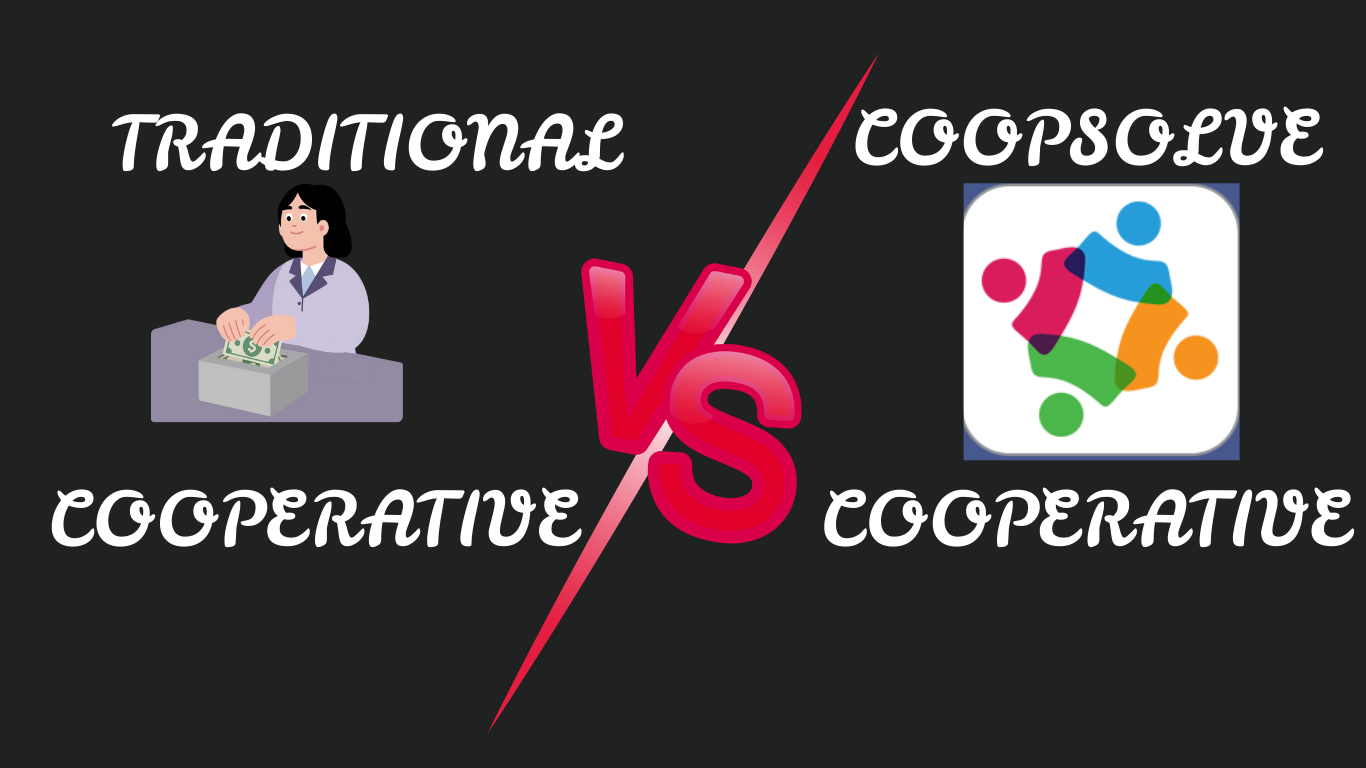
Operational efficiency and accurate record-keeping are essential for the success of cooperative organizations. As cooperatives grow, managing members, finances, and records manually becomes increasingly complex and risky. “The greatest enemy of knowledge is not ignorance, it is the illusion of knowledge.” — Stephen Hawking. Understanding how digital platforms like CoopSolve differ from traditional systems helps organizations make smarter operational decisions.
CoopSolve is a digital cooperative management platform that automates and centralizes cooperative operations such as member registration, verification, contributions, loan processing, reporting, and communication. “It is not the strongest of the species that survives, but the one most responsive to change.” — Charles Darwin. Traditional management systems refer to manual or semi-digital methods such as paper files, handwritten ledgers, and basic spreadsheets used to manage cooperative data and operations.
CoopSolve processes registrations, updates, and reports instantly through automation, reducing delays and administrative workload. Traditional systems depend on manual data entry and physical document handling, which slows operations and limits how quickly information can be accessed or updated. This difference becomes more noticeable as cooperatives grow and data volume increases. Digital speed allows cooperatives to respond faster to members’ needs.
CoopSolve reduces human error through validation rules, structured data fields, and automated calculations. Traditional systems rely heavily on manual input, increasing the likelihood of duplicate entries, missing information, and calculation mistakes. Errors in traditional systems often go unnoticed until they cause serious financial or operational problems. Digital accuracy supports better decision-making.
CoopSolve protects information using controlled access, user permissions, and digital security measures. Traditional systems store data physically or in unsecured spreadsheets that can be lost, damaged, stolen, or altered. Digital security ensures confidentiality, integrity, and trust, especially when handling sensitive member or financial data.
CoopSolve allows authorized users to access records anytime and from anywhere, supporting remote management and faster service delivery. Traditional systems require physical presence or access to specific computers or files, limiting flexibility and slowing operations. Digital accessibility improves responsiveness and operational continuity.
Automation reduces manual workload, allowing staff to focus on higher-value tasks. Processes such as registration, verification, reporting, and financial tracking become faster and smoother. This leads to better service delivery and improved internal productivity.
CoopSolve records every transaction and update, making it easy to track changes and responsibilities. This improves trust among members and management by ensuring that records are clear, traceable, and verifiable at all times.
Structured data entry and automated checks reduce inconsistencies and errors. Reliable data supports sound financial management, planning, and reporting. Accurate records build credibility and reduce conflicts.
As cooperatives expand, CoopSolve can handle increasing data volumes without operational breakdowns. Traditional systems struggle with growth, leading to delays, errors, and inefficiencies.
Failing to properly clean and verify old records before transferring them can introduce errors into the new system. This undermines trust and reduces the effectiveness of digital management.
Without proper training, staff may misuse the system or fail to use its full capabilities. This reduces efficiency and increases frustration.
Maintaining both systems can create confusion, duplication, and inconsistencies. Organizations should transition fully after a controlled migration period.
Sharing passwords or ignoring access controls exposes the system to risk. Strong security discipline is essential to protect sensitive information.
The difference between CoopSolve and traditional management systems lies in efficiency, accuracy, security, and scalability. While traditional systems served cooperatives in the past, they are no longer suitable for modern operational demands. “Progress is impossible without change, and those who cannot change their minds cannot change anything.” — George Bernard Shaw.
With CoopSolve, cooperatives position themselves for sustainable growth, transparency, and improved service delivery.